
That's Not My Mom
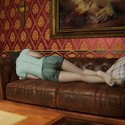

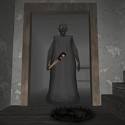



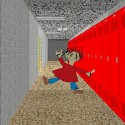
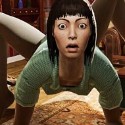
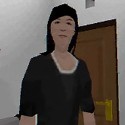
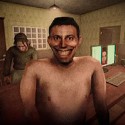








That's Not My Mom looks like a quiet walk through a family house after school but plays like a strict memory exam, where every chair, painting and potted plant counts as evidence. You are a young boy who comes home again and again, and each visit the house is either exactly as you left it or wrong in a way you have to catch. You can play it right here in your browser with nothing to download. This page covers how the loop works, what the keyboard and mouse ask of you, and where the game tends to trip people up. New to the genre? Start with the getting started guide.
| Genre | First-person anomaly horror with walking-simulator pacing |
|---|---|
| Platform | Web browser on desktop or laptop, played with keyboard and mouse, no download or install |
| Core mechanic | Study the house, spot what has changed, and survive when the anomaly turns hostile |
| Key characters or items | The schoolboy, his mother, and the chairs, paintings, vases, pillows and plants that fill the house |
| Primary zone or setting | The boy's own home, revisited after every school day |
| Number of modes or levels | One campaign split into school days, roughly 40 to 60 minutes in total |
What You Actually Do in That's Not My Mom
The core loop is inspection. You step into the house as a schoolboy returning from class, and the job is to compare what you see with what you remember from a normal day. There are no weapons and no inventory puzzles here. The game rewards patient eyes and punishes assumptions, so a picture that now shows another face or a second copy of a vase can be the whole reason a day goes wrong.
Your mother is part of the inspection, and she is the part that unsettles people most. She can stay seated where you expect her, slip into another room, trail after the boy, or appear as a deformed shape that no family photo would explain. Watching where she is and how she behaves before you walk up to her separates calm runs from panicked ones, and you are never told which kind of day you are in. Our guide to the mother's many forms breaks down what to look for. The question underneath it all is simple and nasty: is the person in the hallway still your mother?
The story stays modest but steady. An unexplained anomaly outbreak is spreading across the city, and the boy begins to suspect that his mother has been affected or replaced. Every completed visit nudges you closer to the cause, and the ending arrives only after the last required day.
Atmosphere carries more weight than spectacle. Subtitles and full English audio support the mood, and the photorealistic house feels lived in rather than staged, which is why one wrong detail lands harder than a loud noise would. Silence is used as a tool, and anyone who has played a spot-the-difference horror game before knows to listen for it.
School Days, One House, Rising Pressure
There is a single mode, so there are no maps to pick and no difficulty menu to argue about. Everything runs as one campaign made of school days, with the boy walking into the same house each time. A full pass lands somewhere around 40 to 60 minutes, which is why many players finish in an evening and restart straight away to check what they missed. Think of it as one long inspection broken into short visits. For a step-by-step look at how each visit unfolds, see the daily sequence.
Day one: learning what normal looks like
The first day teaches the rules and gives you a calm look at the standard room layouts. Treat it as a reference photo rather than a warm-up. At this point the entrance, the living spaces and the position of your mother are all as they should be, and every later day gets judged against that picture. Anyone who rushes this stretch pays for it once the changes shrink.
The middle stretch: missing, doubled, altered
Once the early days pass, the changes begin to stack. Objects vanish, furniture appears twice, pictures change, and odd decorations show up on the walls. Some are loud and some are tiny, so you are quietly trained to count things instead of just glancing at them. Your mother matters more here too, because her position or her form can be the anomaly itself, and nothing announces which days work that way.
The late days, when the house stops waiting
Later sections bring active threats. Instead of sitting still as a wrong detail, the anomaly moves, and pursuit sequences replace calm inspection. These chases are where the walking-simulator rhythm breaks, because the question is no longer what changed but where the exit is. The run closes with a concluding encounter after the last required visit, and by then the sprint habit you built matters more than your eye. If chases are your weak spot, read how to survive chase sequences.
That's Not My Mom Controls on Keyboard and Mouse
The input scheme is built for keyboard and mouse and stays small, which suits a game about looking rather than fighting. Here is the full list for a standard run.
- WASD: walk between rooms and step up to the objects you want a closer look at.
- Mouse movement: turn the camera and sweep each room, which makes it your main inspection tool.
- Interact key: press whichever key the on-screen prompt shows once you are close enough to use something.
- Sprint key: hold it during pursuit sequences to outrun the anomaly, and leave it alone while you search.
Because the game runs in your browser, click once inside the game window before you start so it picks up your mouse and keyboard. If the camera does not respond, that click is usually the fix. The fullscreen button under the game window gives you a bigger picture, which helps when you are hunting for small changes on a wall.
Mouse sensitivity matters more than most people expect. A slow, steady sweep catches a missing frame, while a fast flick across a wall lets a duplicated plant hide in the blur. If you keep missing things the camera passed over, turn the sensitivity down before you blame your memory. A touchy mouse can leave you half a step behind on every single day.
Prompts appear on screen when something can be used, so you never need to memorize a long binding list. What you do need is discipline about where your hands rest during a chase: on the movement keys and the sprint key, not hovering over interact. Keys can differ between versions of the game, so a glance at the controls screen before day one is worth the thirty seconds. You can also check our controls page.
Input is keyboard and mouse only, with no timing windows or aiming to practice. The one real skill here is steady camera control, and it improves quickly with every run.
Anomalies Worth Knowing by Sight
Anomalies in That's Not My Mom run from small visual differences to changes that swallow an entire room. The house is built from ordinary props, so the first things to learn by heart are the chairs, paintings, vases, pillows and plants, along with the boy's mother, who is the most variable thing in any room. For a fuller breakdown, see our guide to spotting anomalies.
- Missing objects, such as a picture frame that is no longer on the wall.
- Duplicates, where a single item has quietly become several.
- Altered pictures, including a painting that now holds a different face.
- Scale problems, like household objects that are far too big for the room.
- Extra symbols or decorations on walls that were bare before.
- An animal that does not behave the way it did on the last visit.
Duplication is the category most people underestimate. Comparing quantities as well as appearance catches several anomalies that look perfectly normal at a glance, and it is the habit Exit 8 veterans bring with them on day one. Anyone arriving from that game tends to settle in fastest, since the rhythm of memorize, compare and walk on is already familiar.
A quieter detail only shows up after a few runs: the clean days are the hardest. When nothing in the house is wrong, nothing signals that, and you end up staring at a perfectly normal sofa wondering whether the cushion count shifted. That second-guessing is the real horror engine of That's Not My Mom, more than any shape in the corner.
Scale tricks deserve their own mention because the eye forgives them. An oversized household object can pass for part of the furniture until you ask how it fit through the door, and wall symbols only read as wrong if you remember the day before. A mental snapshot beats a vague feeling every time, because what is being tested is memory far more than reflexes.
Rookie Habits That Burn Through Runs
The classic mistake is searching in a random order. Players wander like tourists, glance at whatever catches the eye, and leave the entrance unchecked until they are already deep inside the house. A fixed route solves most of it: entrance first, each room in sequence, and the mother last.
The second mistake is walking straight up to the mother. Her location and behavior tell you whether something is off, and approaching before you have read them can turn a fixable day into a chase. Cautious players, the ones who stand in a doorway for a few seconds before committing, tend to do best and rarely need the escape path.
Advanced play treats the pursuit sequences as a separate skill. Learn the corridors and exits during the calm days, because once the anomaly turns active there is no time to study the layout. Completionists who replay That's Not My Mom for a cleaner run tend to improve by memorizing the escape path, not by getting faster with their hands, since success comes down to knowing the house.
A smaller trap is trusting a single pass. Walk the route, then walk it once more before you commit, because a second look catches the change your brain smoothed over the first time. There is little reason to rush, and an extra thirty seconds costs almost nothing in a game this short.
Where Players Split on That's Not My Mom, and What to Try Next
Not everyone loves what the game does. The simple story and modest visuals are part of the package, and some players find the loop repetitive once they have learned the room layouts. Others argue it is not very scary, since the dread comes from atmosphere and sudden pursuit rather than constant threat.
How long does it take? A full pass of That's Not My Mom takes about 40 to 60 minutes, which makes it an easy single-session game that you can open in a browser tab and finish in one sitting. Replay value is a matter of taste. People who enjoy it treat it like a short sitting rather than a long campaign, and anyone hoping for hidden depth should adjust expectations first.
If you finish and want more of the same, try That's Not My Mom 2 or the photo-based Photomaly. The obvious neighbors beyond this site are Exit 8 and Twisted Gallery, the two anomaly games That's Not My Mom was inspired by. All of them share the habit of asking you to memorize a normal space and then punishing you for missing a change. Browse the full anomaly games catalog for more spot-the-difference horror in the same vein, and bring the same route-first discipline to each one.
Walk through the front door of That's Not My Mom with a fixed route, a calm eye on the mother, and the pursuit corridors memorized, and the anomaly loses most of its leverage. Keep your sprint ready, count the vases twice, and trust your memory of day one over your nerves until the whole thing becomes a memory test you can win.